Stop Trying to Get Everyone on the Same Page
The Organizational Advantage of Different Perspectives
When a leader says, “We need to get everyone on the same page”, it sounds so reasonable nobody questions it. After all, isn’t that what good leadership is supposed to do?
When leaders confuse alignment with agreement, they eliminate the value good teams offer. Diversity of experience, background, responsibility, and expertise shapes what people notice, what they question, and the possibilities they can see.
If you ask six people to address an issue and your objective is to get all six to see it the same way and reach the same conclusion, why do you need six people?
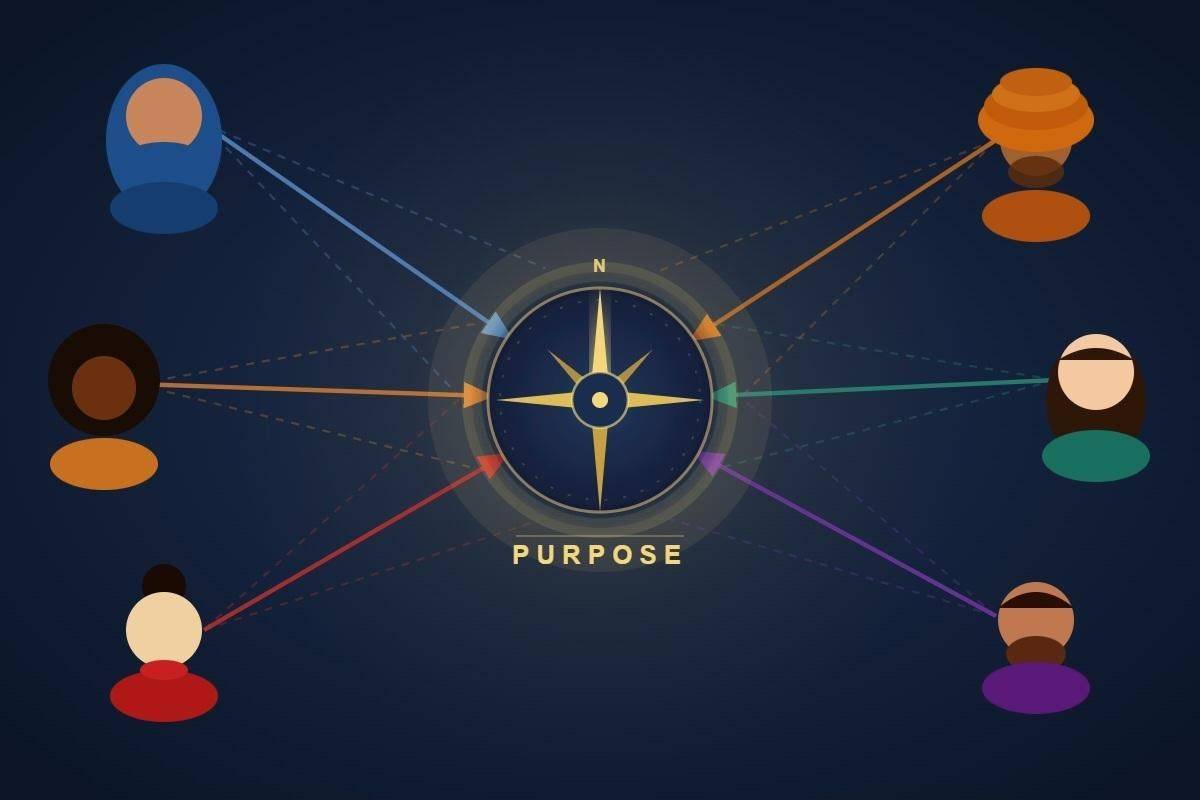
The objective isn't to eliminate differences in perspective. It's to give those differences a common purpose against which they can be evaluated.
Diversity doesn't create alignment. A unified understanding of organizational purpose and a shared commitment to fulfilling it make diversity invaluable.Consider a leadership team facing a significant business decision. Each person brings a different combination of experiences, cultural influences, education, expertise, successes, and failures. Those differences shape how they identify and evaluate options, risks they recognize, questions they ask, and possibilities they see.
Who's right?
Potentially, all of them. And that's precisely the advantage. Each perspective reveals something the others might overlook. The problem arises when those perspectives lead to competing priorities rather than contributing to a decision that is guided by the organization’s purpose.
Without a unified understanding of organizational purpose, people evaluate options based on different definitions of success. What looks like the right decision to one person may look like a serious mistake to another.
The solution isn't to convince everyone to see things the same way. It's to establish a basis for evaluating their different perspectives.
That basis is a unified understanding of organizational purpose and a shared commitment to fulfilling it.
When people understand and embrace who the organization exists to serve, the value it provides, how it delivers that value, what it's ultimately trying to accomplish from the consistent delivery of value, and the culture it intends to maintain along the way, they have something against which to evaluate opportunities, challenges, alternatives, and decisions.
Different perspectives don't disappear. Nor should they. They become valuable inputs into decisions guided by purpose rather than competing individual priorities.
The objective isn't to get everyone thinking alike. It's to ensure that, regardless of how differently people think, they're committed to achieving the same desired results.
Think about a significant decision your leadership team made recently.
Did you actively seek different perspectives, or did the discussion gravitate toward agreement? Were alternatives evaluated against your organization's purpose, or did individual preferences and priorities influence the outcome?
What might you have missed because someone saw things differently but never spoke up?
The next time your team faces a decision, encourage people to challenge assumptions, question alternatives, and offer perspectives others may not have considered. Then evaluate those contributions against your organization's purpose.
The objective isn't agreement. It's making better decisions that move your organization toward its desired future.
Want to find out whether your leadership team is making the most of its different perspectives while remaining aligned around organizational purpose? Let's spend 20 minutes in an initial discovery conversation.
No sales pitch. No selling. Guaranteed.
Questions? Email larry@mandelberg.biz. Questions? Email larry@mandelberg.biz. Want to learn more about surviving success and building an organization that generates sustainable, profitable growth? It’s all in Businesses Don’t Fail, They Commit Suicide — how to survive success and thrive in good times and bad.